New Labour and Constitutional Reform
Tony Blair’s government was elected with a landslide majority in 1997 of 179 seats. They secured this victory with a New Labour campaign message that included significant constitutional modernisation. They promised reforms to the constitution and led the electorate to believe there would be several constitutional changes. These included:

- A UK Bill of Rights
- An elected upper chamber
- A proportional system of elections
- Devolution to the different areas of the UK
- Referendums on major constitutional reforms
Labour did not achieve changes in all of these areas, and some commentators have argued that the Labour government did not live up to expectations in the area of constitutional reform. However, in 13 years of New Labour government, some major constitutional changes which can be best split into four categories:
Constitutional Reform Timeline 1997–2024
Referendums
The Labour government promised referendums on issues of primary constitutional concern. Referendums were held on devolution to Scotland, Wales, and Northern Ireland. Referendums were also held on whether there should be a directly-elected Mayor of London.
| Referendum | Year | Result (For) | Result (Against) |
|---|---|---|---|
| Scotland | 1997 | 74% | 26% |
| Wales | 1997 | 50.3% | 49.7% |
| Northern Ireland | 1998 | 71% | 29% |
| Greater London | 1998 | 72% | 28% |
However, promised referendums from Labour on issues such as electoral reform, the European Constitution and Britain joining the Euro were never held.
The Electoral Commission
The Electoral Commission was set up in 2001 through the Political Parties, Elections and Referendums Act 2000 (PPERA) to:
- Regulate party and election finances
- Register political parties
- Oversee electoral registers/ registration of voters
- To give guidance and oversight in the running of elections and referendums
- To oversee the distribution of seats in the EU elections (before 31st January 2020)
Notably, the Electoral Commission was designed to be independent of government and parliament. However, the Elections Act (2022) placed the Electoral Commission under the supervision of the government, arguably limiting its independence.
Voting Systems
A more proportional voting system was introduced for new elections under Labour, including those for the devolved assemblies, the European Parliament, and elected mayors. However, no action was taken on electoral reform for elections to Westminster. This was despite the Labour Manifesto in 1997 promising that “we are committed to a referendum on the voting system for the House of Commons”.
Whilst Labour was ideologically committed to a more proportional voting system, it is clear that the fact they had won a majority of 179 seats in 1997 (followed by a 166 majority in 2001) had an impact on their commitment to this project. This highlights one of the problems with constitutional reform: a government is unlikely to proceed with any constitutional reform that may be in the national interest, but is against its own political interests.
In 1997, Labour established the Independent Commission on the Voting System, chaired by Lord Roy Jenkins of the Liberal Democrats. The Commission reported in 1998, recommending a hybrid system called AV+ (the Alternative Vote with a small top-up element to improve proportionality). Despite the report, Labour never held the promised referendum on changing the Westminster voting system. Critics argued this was because Labour’s landslide majority, achieved under FPTP, removed any political incentive to reform the very system that had delivered it.
Political Finance Reform
Under New Labour, the Political Parties, Elections and Referendums Act (2000), often known as the PPERA, was passed. This Act established the Electoral Commission and set down financial regulations for political parties. Its key provisions included that:
- It limited political parties from accepting donations from individuals not on the electoral register (i.e. individuals from other countries)
- It placed limits on the amount of money that political parties could spend in the run-up to each election. At present, parties can spend £30,000 per constituency
- All donations over £7,500 have to be declared by political parties

Devolution
As promised, the Labour Government introduced wide-scale devolution across the UK. This resulted in devolved governments for: Northern Ireland (1998), Scotland (1998), Wales (1998), and London (1999).

The Greater London Authority (GLA), created by the Greater London Authority Act 1999, was a new model of city-region devolution combining a directly elected Mayor of London with a 25-member London Assembly. This GLA / metro-mayor model would later be extended under the Coalition and Conservative governments to other English city-regions including Greater Manchester, the West Midlands and Liverpool City Region.
However, Labour plans for greater devolved assemblies were dropped after a ‘no’ vote in a referendum for a North-East Regional Assembly. The result of the referendum was 77.9% against and 22.1% in favour. In addition, only 12 local authorities adopted the new elected mayor model, one of these was London.
The Northern Ireland Assembly was suspended four times between 2000 and 2002, and then for a continuous period between October 2002 and May 2007 (around four and a half years). The trigger was Operation Torsion, a 2002 PSNI raid on Sinn Féin’s Stormont offices on suspicion of IRA intelligence-gathering (the ‘Stormontgate’ affair); the resulting collapse of trust between the Ulster Unionist Party and Sinn Féin, compounded by ongoing disputes over IRA decommissioning, made power-sharing impossible. Westminster reimposed direct rule under the Northern Ireland Act 2000. Devolution only resumed after the IRA formally ended its armed campaign (July 2005) and the St Andrews Agreement (October 2006) brokered new arrangements between the DUP and Sinn Féin, leading to fresh Assembly elections in March 2007 and the restoration of devolved government on 8 May 2007. The episode showed how fragile devolution remained in practice when underlying paramilitary and identity disputes had not been fully resolved.
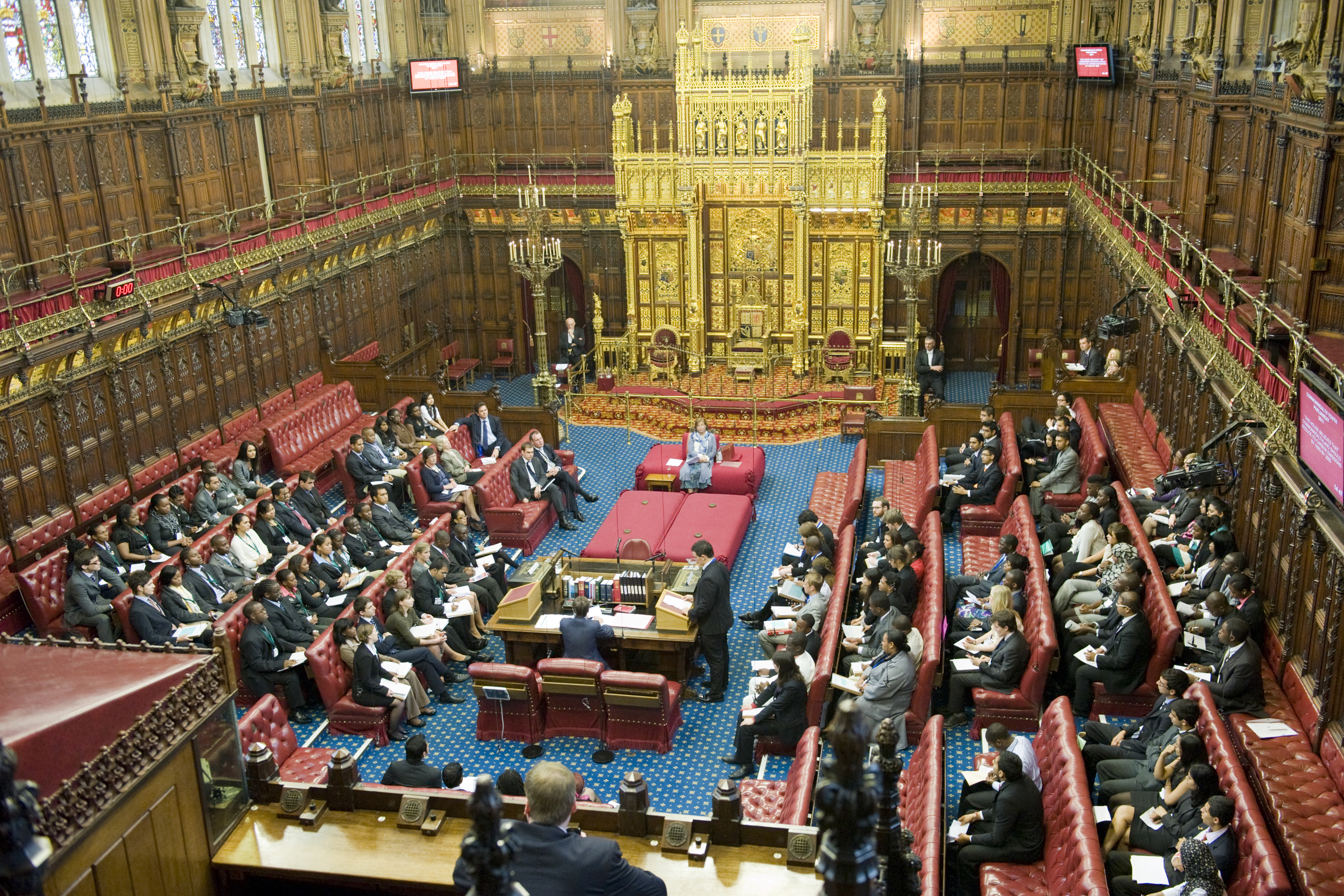
House of Lords Reform
The Labour government promised a wholly elected House of Lords. They did not manage to achieve this. However, in 1999 they passed the House of Lords Act (1999). This removed all but 92 excepted hereditary peers from the Lords. Ironically, the 92 hereditary peers that were able to remain did so by winning elections held by their fellow peers. This means the only elected people to ever sit in the House of Lords are hereditary peers! Despite this change, after 13 years, Labour could not bring about their promise of a wholly elected House of Lords. By the time that the second stage of reforms was likely to commence, Labour’s desire for constitutional reform had waned.
Judicial Reform
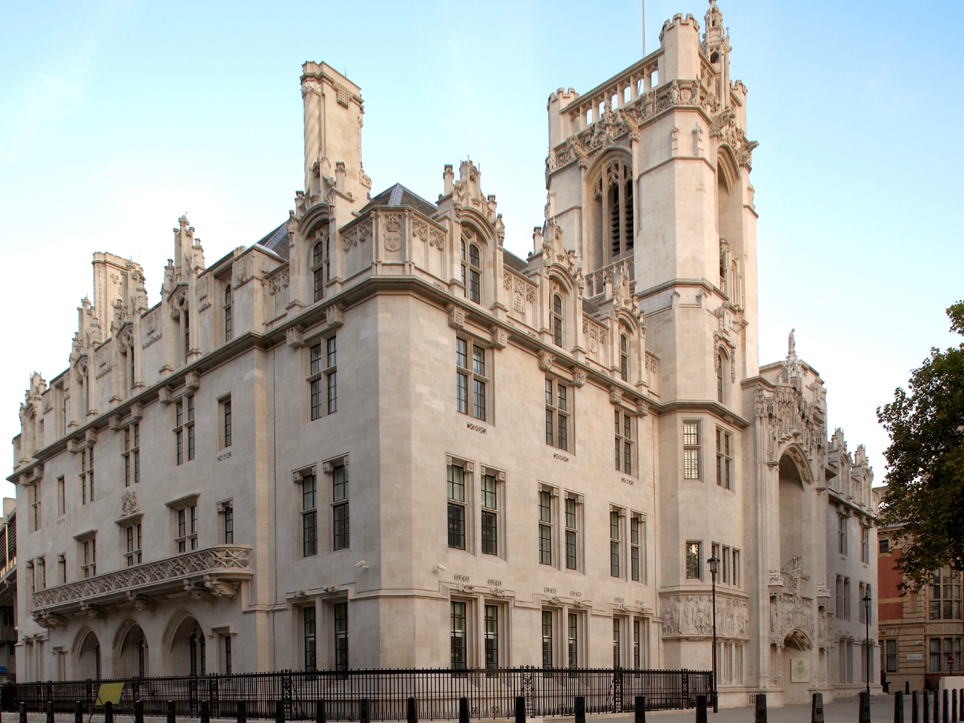
Labour introduced widescale Judicial Reform. In 2005 the Constitutional Reform Act introduced a Supreme Court for the UK. This Act also removed most of the traditional powers of the Lord Chancellor and introduced a new Judicial Appointments Commission.
House of Commons Modernisation
Under New Labour, several ways to modernise the procedures of the House of Commons were adopted:
- Prime Minister’s Questions was moved to a Wednesday at 12.00, rather than 15.00 on both Mondays and Thursdays
- Additional Debates were held in Westminster Hall to allow more time for backbench debates
- Sitting hours were changed to make them more flexible and efficient
Rights-Based Legislation
Labour incorporated the European Convention on Human Rights into UK law by passing the Human Rights Act (1998). Later, under Gordon Brown, the Equality Act (2010) was passed. This Act legally prevents discrimination based on protected characteristics, including: race, disability and religion.
They also passed the Freedom of Information Act in 2000. This gives individuals the right to request information held by public bodies. FOI requests were the basis for the revelation of information on MP’s expenses claims that led to the major Expenses Scandal (2009), enabling MPs’ to be held to account for their conduct.
Labour also proposed a British Bill of Rights, but this was not introduced as law. The Supreme Court criticised Labour for not following Article 5 of the Human Rights Act by introducing stricter anti-terrorism laws in the context of the “War on Terror”.
“Freedom of Information. Three harmless words. I look at those words as I write them, and feel like shaking my head till it drops off my shoulders. You idiot. You naïve, foolish, irresponsible nincompoop. There is really no description of stupidity, no matter how vivid that is adequate. I quake at the imbecility of it… governments, like any other organisations, need to be able to debate, discuss and decide issues with a reasonable level of confidentiality. This is not mildly important. It is of the essence. Without the confidentiality, people are inhibited and the consideration of options is limited in a way that isn’t conducive to good decision-making. In every system that goes down this path, what happens is that people watch what they put in writing and talk without committing to paper. It’s a thoroughly bad way of analysing complex issues.”
Tony Blair reflecting on the Freedom of Information Act (2000) in his autobiography My Journey
Evaluating New Labour’s Constitutional Reforms
There are competing arguments over how significant constitutional reform was under New Labour.
Major Step Toward Reform
The House of Lords Act 1999 removed the automatic right of all but 92 hereditary peers to sit and vote, the most significant reform of the Lords in centuries. This broke the assumption that birth conferred legislative power.
Left the Lords Unelected
Labour promised a fully elected Lords but delivered only the first stage. The 92 remaining hereditary peers and all life peers retained unelected power. The second stage, a democratic replacement, was never legislated.
Transformative Transfer of Power
Devolution to Scotland, Wales, and Northern Ireland fundamentally altered the UK’s constitutional structure. For the first time, non-English nations had their own legislatures with tax-varying or legislative powers, something not achieved in over three centuries.
England Left Without a Settlement
The West Lothian Question was created but not resolved: Scottish MPs could vote on English matters while English MPs had no reciprocal say over devolved Scottish policy. The 2004 North-East England referendum (77.9% against) also showed that English regional devolution lacked public support.
Rights Incorporated into Domestic Law
The Human Rights Act 1998 incorporated the ECHR into UK law, allowing individuals to enforce Convention rights in British courts without going to Strasbourg. This was a genuine constitutional innovation.
No Entrenched Bill of Rights
The HRA could be repealed by a simple Act of Parliament, as the Conservatives later proposed. Labour’s failure to entrench rights meant the reform remained constitutionally vulnerable. A British Bill of Rights, promised in 1997, was never introduced.
Proportional Systems Introduced
PR systems were introduced for the devolved parliaments (AMS in Scotland, Wales and the London Assembly; STV in Northern Ireland), the European Parliament (closed party list), and the Greater London Authority. The Electoral Commission was created to regulate party finance and conduct elections independently.
Westminster FPTP Left Untouched
Despite commissioning the Jenkins Report (1998) recommending AV+ for Westminster, Labour never held a referendum on changing the voting system. They used their 179-seat FPTP majority to avoid the reform that would have reduced their own dominance.
Independent Supreme Court Created
The Constitutional Reform Act 2005 established a Supreme Court independent of the House of Lords, removed the judicial functions of the Lord Chancellor, and created the Judicial Appointments Commission, substantially strengthening judicial independence.
Reforms Came Late; Diversity Left Unresolved
The judicial reforms only came in 2005, Labour’s third term, partly driven by Derry Irvine’s accumulated resistance to reform. The Judicial Appointments Commission also failed to fix the lack of diversity in the judiciary, and the Supreme Court’s powers remained fundamentally the same as those of the Appellate Committee it replaced.
FOI and Political Finance Reformed
The Freedom of Information Act 2000 and the Political Parties, Elections and Referendums Act 2000 represented genuine transparency reforms, the first time party donations and election spending were systematically regulated and published.
Blair Later Regretted the FOI Act
Tony Blair later wrote in his memoirs that the FOI Act was a “mistake,” describing it as an obstacle to frank internal discussion. The Act was introduced but Blair worked to limit its scope and exemptions were frequently used to block disclosures.
Most Major Reforms Delivered in the First Term
Despite 9/11 and the War on Terror dominating politics after 2001, the Blair government had already legislated the most significant wave of constitutional change since 1945. Devolution, the Human Rights Act, and the House of Lords Act were all delivered by 2000, before external pressures mounted.
Post-9/11 Drained Reform Impetus
After 2001, the events of 9/11 and the War on Terror drained the political impetus for constitutional reform. The civil liberties cases Labour lost under its own HRA (particularly over anti-terrorism detention powers) showed that even its completed reforms were being undermined by its own security agenda.
Commons Modernisation Improved Scrutiny
Moving PMQs to a single Wednesday slot and creating Westminster Hall debates gave backbenchers more opportunity to scrutinise the government. These changes made the Commons more accessible and improved the quality of parliamentary debate.
No Significant Reduction in Executive Dominance
No significant changes were made to the House of Commons that would reduce the structural power of the Executive. Blair’s large majorities enabled him to dominate Parliament, and the procedural tweaks made did not address the fundamental imbalance between executive and legislature.
Constitutional Reform Since 2010

Since 2010, successive governments have approached constitutional reform with varying degrees of ambition and success. The Coalition (2010–2015) promised wide-ranging reform but delivered only selectively; Conservative majority governments from 2015 onwards focused more on Brexit-era constitutional battles than domestic reform; and the current Labour government under Keir Starmer has inherited a renewed reform agenda from the Brown Commission. The accordions below track each government’s record in turn.
In May 2010, the Conservatives and Liberal Democrats agreed to form a coalition government. To prepare for this, they published a coalition agreement. As part of this agreement, many areas of constitutional reform were to be settled.
| Reform Promised | Outcome |
|---|---|
| Fixed-term Parliaments | Achieved, FTPA 2011 |
| Referendum on AV voting system | Partial, held 2011, but 67.9% rejected AV |
| Elected House of Lords | Abandoned, 91 Conservative rebels killed the bill (July 2012) |
| Recall of MPs | Partial, Recall of MPs Act 2015 (critics say watered down) |
| Reduce Commons to 600 seats | Abandoned, boundary changes blocked by Lib Dems in 2013 |
| English Votes for English Laws | Achieved, introduced 2015 (later rescinded 2021) |
| Greater devolution to Scotland and Wales | Achieved, Scotland Act 2016, Wales Act 2017 |
| British Bill of Rights | Abandoned, not pursued by Coalition |
| EU referendum lock (public vote on further EU powers) | Achieved, EU Act 2011 |
The Alternative Vote (AV) Referendum
As promised, a referendum was held in May 2011 on whether Britain should adopt the Alternative Vote system for Westminster elections. The Liberal Democrats campaigned for AV; the Conservatives and Labour campaigned to keep First-Past-the-Post. This result was a decisive 67.9% in favour of keeping FPTP.
An Elected House of Lords
The government had planned to pass a bill through Parliament to turn the House of Lords into a senate, with 450 elected members serving a 15-year term. In July 2012, 91 Conservative MPs voted against even debating the issue in Parliament, and the proposal came to a complete standstill. As a result, Nick Clegg also said he would not support electoral boundary changes, part of the first coalition deal.
Fixed-Term Parliaments Act (2011)
In 2011, the Fixed Term Parliaments Act (FTPA) was passed. This guaranteed that elections would be held every five years (and no earlier) unless: (1) at least two-thirds of the House of Commons agreed a motion for an early general election, or (2) a motion of no confidence was passed in the government and no alternative government could be formed and confirmed within 14 days.
Critics have argued the Liberal Democrats only pushed for this to avoid being kicked out of government as soon as the Conservatives’ popularity increased enough for them to call a new General Election. The FTPA was repealed in April 2022 through the Dissolution and Calling of Parliament Act. The power to call an early general election has now returned to the Prime Minister.
On the face of it, the Fixed-Term Parliaments Act (2011) appeared to be an extremely significant reform. However, in reality, it perhaps was never that important as it could be easily circumvented:
June 2017: Theresa May wanted to hold an early election. Labour voted in favour of this, because they did not wish to appear weak. In reality, this will always be an important consideration for an opposition party. In June 2017 Parliament voted for an election by 522-13, comfortably above a 2/3s majority.
December 2019: Boris Johnson tried to persuade Parliament to vote for an early election. Three times he failed to reach the required 2/3 majority. Therefore, Johnson passed a separate bill called the Early Parliamentary General Election Act 2019 to bypass the Fixed-Term Parliament Act and hold an early election.
The Recall of MPs Act (2015)
In the Coalition Agreement, it was stated that legislation would be passed allowing the recall of MPs by their constituents. Prior to this, there had been no mechanism for constituents to remove an MP from their position. The bill that was eventually passed was called the Recall of MPs Act (2015). It was a much watered-down version of what had initially been proposed (there is no provision for MPs to be recalled on the basis of poor performance or ‘crossing the floor’ - i.e. changing parties). The circumstances under which an MP could be recalled were limited to those in which the serving MP had been given a prison sentence or suspended by the House of Commons. A petition signed by 10% of constituents in these circumstances would trigger a by-election.
| MP (Party) | Trigger | % Signed | Outcome |
|---|---|---|---|
| Ian Paisley Jr (DUP) | Suspended 30 days for failing to declare money received from the Sri Lankan government | 9.4% | Threshold not met; retained seat |
| Fiona Onasanya (Labour) | Imprisoned for perverting the course of justice over a speeding ticket | 27.6% | By-election held; did not stand |
| Christopher Davies (Conservative) | Convicted for false expense claims | 18.9% | By-election held; lost to Liberal Democrats |
| Margaret Ferrier (SNP) | Suspended 30 days for breaching COVID-19 rules | 14.6% | By-election triggered; lost seat |
| Peter Bone (Conservative) | Suspended six weeks for bullying and sexual misconduct | 13.2% | Removed as MP |
| Scott Benton (Conservative) | Suspended 35 days for offering paid lobbying for the gambling industry | Petition triggered | Resigned before petition closed |
In June 2023 Boris Johnson resigned as MP for Uxbridge and South Ruislip. He had recently been subject to an investigation from the Committee on Privileges regarding his misleading of Parliament over the Partygate Affair. The committee recommended that he was suspended from the House of Commons for 90 days, meaning a recall petition would follow. The resignation of Johnson was seen by most as an attempt to avoid the ignominy of being recalled by his own constituents.
Registration of Lobby Groups
In February 2010, David Cameron called lobbying the ‘next great scandal waiting to happen’. The government passed the ‘Lobbying Bill’ in 2014, despite resistance from the House of Lords. This created a register for all lobbying groups and limited spending on political campaigns by lobbyists during General Elections.
The lobbying issue came back to the fore in February 2015 when two former Foreign Secretaries, Malcolm Rifkind and Jack Straw, were filmed by undercover reporters agreeing to use their influence to support a fictional Chinese company in exchange for money. Both were forced to resign from parliamentary positions. Embarrassingly for David Cameron, in 2021, he himself was also engulfed in a lobbying scandal surrounding his work for Greensill Capital, an obscure finance company, leading to a parliamentary inquiry.
European Union Reform
The Coalition Agreement agreed to ensure that any future powers transferring to the European Union would be subject to a referendum. They also agreed to consider a UK Sovereignty Bill, making sure that it is clear that ultimate sovereignty remains with the UK. They were successful with the first point. The European Union Act (2011) required referendums for new treaties transferring powers from the UK to the EU. In 2013, David Cameron also promised to hold a referendum on the UK’s membership of the EU.
A British Bill of Rights
The Conservatives have for many years talked about replacing the Human Rights Act with a UK Bill of Rights. The Liberal Democrats agreed to consider this if a citizen’s convention was set up to consider drawing up a codified Constitution. A commission on the Bill of Rights showed that a majority of people in the UK favoured a UK Bill of Rights. However, relatively little progress was made on considering a Codified Constitution.
Greater Powers to the Devolved Regions
Wales: New powers over energy, transport, environment, and elections were promised for Wales in February 2014. In addition, in February 2015, David Cameron suggested a referendum could be held on whether Wales could set its own income tax rates.
Scotland: In September 2014, a referendum was held in Scotland on whether or not Scotland should remain part of the United Kingdom. The result was that 55% of Scots voted to remain in the UK. Following this, new powers were granted to Scotland as part of ‘Devo-Max’. These include the power to deviate from UK Income Tax levels by 3%. It also added greater powers on all other issues except Defence and Foreign Affairs. Critics of ‘Devo-Max’ have suggested that the government only granted it after panic during the Scottish Referendum campaign, suggesting that the ‘Yes’ campaign was heading for victory.
Northern Ireland: Northern Ireland saw the most minor change under the Coalition. Because of the unique ‘power-sharing’ arrangement between the nationalists and unionists in Northern Ireland, change was more limited as time needed to be given to focus on the consolidation of the status quo.
David Cameron surprisingly won a small majority in the May 2015 General Election. This gave his government the scope to consider some constitutional changes:
English Votes for English Laws (EVEL)
By adding the ‘Grand Committee’ stage to the legislative process, David Cameron’s Government moved somewhat towards allowing English MPs to have a special say on English-only matters. However, this is still not satisfactory to many, as Welsh, Scottish and Irish MPs still had a vote on the final bill.
EU Referendum
On the 23rd of June 2016 the promised referendum was held on Britain’s place in the European Union. The British people voted to leave the EU by 52% to 48%. David Cameron resigned as Prime Minister immediately following this result.
Greater Devolution
David Cameron oversaw greater devolution to Scotland and Wales. The Scotland Act (2016) gave greater tax-raising powers to the Scottish Parliament. The Act also stipulated that a Referendum would have to be held before either the Scottish Parliament or the Scottish Government could be abolished. The Wales Act (2017) gave tax-raising powers to the Welsh Assembly.
As a result of the focus on Brexit, very little broader constitutional reform took place under Theresa May. However, it was a critical period for the UK and its approach to Brexit.
EU (Notification of Withdrawal) Act (2017)
In March 2017, Parliament passed the European Union Withdrawal Bill (2017) to instigate Article 50, the mechanism by which countries have a two-year window to negotiate their exit from the European Union.
EU (Withdrawal) Act (2018)
In July 2017, the Government introduced the bill that would legally see Britain withdraw from the European Union. However, as a result of the impasse over Brexit, Theresa May could not implement any other significant constitutional reforms.
Students sometimes claim that Parliament “blocked Brexit” or that the courts were acting against the referendum result. This is inaccurate. In R (Miller) v Secretary of State for Exiting the EU [2017], the Supreme Court ruled that triggering Article 50 required an Act of Parliament because it would affect rights conferred by the European Communities Act 1972. The Court did not rule on whether Brexit should happen, only that Parliament, not the Executive, must authorise it. In Cherry/Miller II [2019], the Court held that Johnson’s five-week prorogation was unlawful because it prevented Parliament from scrutinising government. Both cases affirmed parliamentary sovereignty, they did not undermine it.
As part of his 2019 election manifesto, Boris Johnson made several constitutional reform promises:
- Remove the Fixed-Term Parliaments Act (2011)
- Equalise the size of electoral constituencies
- Limit the power of judicial review
- ‘Get Brexit done’
Exiting the European Union
On 30th January 2020, the European Union (Withdrawal Agreement) Act saw Britain formally withdraw from the EU on the 31st January 2020. However, the government still needed to reach a deal on the future relationship with the EU by 31st December 2020, or Britain would have faced a ‘no-deal’ relationship with the EU.
English Votes for English Laws Abolished
In July 2021, the Government abolished the English Votes for English Laws (EVEL) process in the House of Commons. This returned the situation to as it was in 2015 and there is no remedy to the West Lothian Question.
Human Rights Reform Announced (Then Dropped)
In December 2021, the Government announced plans to reform the Human Rights Act. Notably, they have said that the rights of foreign offenders abusing rules to the ‘right to a family life’ needed amending. This was later dropped under Rishi Sunak.
Dissolution and Calling of Parliament Act (2022)
In March 2022, the Government passed the Dissolution and Calling of Parliament Act (2022). This Act repealed the Fixed-Term Parliaments Act and returned the power over when and whether to call a general election back to the Prime Minister as a royal prerogative power.
Elections Act (2022)
In April 2022, the Government passed the Elections Act which made changes to the way elections are conducted and regulated in the UK. Of the changes, the most prominent was the requirement for UK voters to provide photo ID at the polling station.
Judicial Review and Courts Act (2022)
In April 2022, the Government also passed the Judicial Review and Courts Act. This limited the powers of judicial review.
Retained EU Law (Revocation and Reform) Act (2023)
The Retained EU Law (Revocation and Reform) Act 2023 used sweeping delegated powers to sunset thousands of retained EU laws, demonstrating the scale of Henry VIII-style powers available to ministers in the post-Brexit settlement. Henry VIII clauses allow ministers to amend or repeal primary legislation by secondary (delegated) legislation, bypassing full parliamentary scrutiny. Critics argued that this represented a fundamental shift in the balance of power between Parliament and the Executive, and that Parliament had effectively delegated its own sovereignty to government ministers.
Relatively little constitutional reform was attempted under Liz Truss and Rishi Sunak’s governments.
Following her disastrous mini-budget of October 2022, Liz Truss remained Prime Minister for just 49 days and there was no real opportunity for her to engage in constitutional reform. The government of Rishi Sunak attempted constitutional reform in some areas:
In September 2023, Boris Johnson’s proposal for a British Bill of Rights was dropped. By abandoning this plan, Sunak was signalling a return to a more cautious constitutional stance after years of Conservative pressure to replace the Human Rights Act.
The government’s constitutional record was defined more by controversy than substantive reform, with two significant episodes drawing parliamentary and legal scrutiny:
As part of his attempt to pass his controversial Rwanda Policy, Sunak passed the Illegal Migration Act (2023). This Act was widely seen to conflict with international law, and a Government Minister was unable to confirm it complied with the European Convention on Human Rights to Parliament at Second Reading. The Bill limited the rights to judicial review for those seeking asylum in the UK.
Whilst not a constitutional reform, Sunak’s Government did become the first UK Government to invoke Section 35 of the Scotland Act (1998). Section 35 allows the UK Government to block a bill from a devolved Parliament if they believe it will have a negative impact on the rest of the UK. The Sunak Government used it to block the Scottish Gender Recognition Reform Bill, arguing it would have an adverse impact on Equality Law across the UK.
The statutory text of Section 35 confirms the broad discretion given to the Secretary of State when invoking this power:
“(1) If a Bill contains provisions, (a) which the Secretary of State has reasonable grounds to believe would be incompatible with any international obligations or the interests of defence or national security, or (b) which make modifications of the law as it applies to reserved matters and which the Secretary of State has reasonable grounds to believe would have an adverse effect on the operation of the law as it applies to reserved matters, he may make an order prohibiting the Presiding Officer from submitting the Bill for Royal Assent.”
Scotland Act 1998, s.35
Prior to becoming Prime Minister, Keir Starmer asked former Prime Minister Gordon Brown to lead a commission into potential constitutional reform. When the government gave their first King’s Speech, they outlined a number of constitutional reforms.
After becoming Labour leader in 2020, Keir Starmer asked Gordon Brown to lead a commission into the constitutional future of the UK. The subsequent report, A New Britain: Renewing our Democracy and Rebuilding our Economy, was published on 5 December 2022. Its seven key recommendations included:
- To embed into law the duties of Government
- To devolve more power to local communities
- To create a new institution to represent the voice of the devolved nations within central government
- To improve the Scottish, Welsh, and Northern Irish Governments
- To create mechanisms for greater cooperation between devolved governments
- To create new procedures to make MPs more accountable
- To replace the House of Lords with a smaller democratic second chamber
Progress Under Starmer (2024–Present)
The following constitutional changes have been made or are in progress under Keir Starmer:
- House of Lords (Hereditary Peers) Act: Became law in 2025. From the 2026 session onwards, hereditary peers no longer have the right to sit in the House of Lords. This completed the second stage of Lords reform left unfinished by the House of Lords Act 1999. A proposal to introduce a mandatory retirement age of 80 for life peers was dropped from the bill during its passage through Parliament.
- English Devolution and Community Empowerment Act: Became law in April 2026, extending devolved powers to English local authorities and city-regions.
- Votes at 16: Included in the 2026 King’s Speech as part of the Elections and Democracy Bill. If passed, it would lower the voting age at General Elections to 16 for the first time.
Evaluating Post-2010 Constitutional Reform
Since 2010, constitutional reform has been driven less by programmatic ambition and more by short-term political pressures. The following debate grid assesses the significance of key post-2010 reforms.
Hereditary Peers Finally Removed
The House of Lords (Hereditary Peers) Act 2025 completed the second stage of Lords reform left unfinished in 1999, removing the final 92 hereditary peers. This represents a historic step: for the first time, no seat in the Lords is held by hereditary right.
Still No Elected Second Chamber
The Lords remains entirely appointed, not elected. Removing hereditary peers makes it more meritocratic but no more democratic. The fundamental deficit of legitimacy (an unelected chamber revising primary legislation) remains unresolved.
Public Given a Direct Say on AV
The 2011 AV referendum was the first UK-wide referendum on the Westminster voting system. Whatever the result, it fulfilled a democratic commitment to allow the public to decide, something no previous government had done despite decades of pressure from electoral reformers.
FPTP Entrenched by a 2-to-1 Margin
The 67.9% vote to retain FPTP set back electoral reform for a generation. The result was shaped as much by a poorly funded Yes campaign and voter unfamiliarity with AV as by genuine preference for the status quo. Electoral reformers have not secured a similar opportunity since.
Courts Demonstrated Their Independence
The Supreme Court's rulings in Miller 1 (2017) and Miller 2 (2019) showed a judiciary willing to hold the government to account even on politically contentious constitutional questions, establishing that Parliament's sovereignty cannot be bypassed by executive prerogative.
Judiciary Under Political Pressure
Miller 2 triggered a Conservative backlash, with proposals to curb judicial review and replace the HRA with a British Bill of Rights. The Illegal Migration Act (2023) was openly drafted without confirmation of ECHR compliance, suggesting the post-2010 period has seen growing executive hostility to independent courts.
Parliamentary Sovereignty Restored
Brexit ended the supremacy of EU law in the UK and the automatic jurisdiction of the European Court of Justice. Proponents argue this fully restored parliamentary sovereignty for the first time since 1973, fulfilling a key constitutional promise of the Leave campaign.
Constitutional Disruption Without Settlement
Brexit destabilised devolution (particularly in Northern Ireland via the Protocol), strained relations between Westminster and the devolved governments, and generated years of constitutional crisis. It removed one set of legal constraints without replacing them with any equivalent domestic rights framework.
Powers Deepened Under Scotland Act 2016
The Scotland Act 2016, born out of the 2014 independence referendum, gave Holyrood significant new fiscal powers including control over income tax rates and bands. The Sewel Convention was also given statutory footing, strengthening the constitutional status of devolution.
Devolution Settlement Remains Unstable
The post-2010 period saw the first use of Section 35 to block Scottish legislation (2023), repeated suspensions of the Northern Ireland Assembly, and the English Votes for English Laws procedure introduced then rescinded. The devolution settlement remains contested rather than consolidated.
HRA Survived Conservative Pressure
Despite repeated Conservative promises to repeal the Human Rights Act and replace it with a British Bill of Rights, the HRA remained on the statute book. Its survival through three Conservative prime ministers who explicitly opposed it demonstrates the resilience of rights frameworks once entrenched in domestic law.
Rights Under Sustained Executive Attack
The post-2010 period saw the Overseas Operations Act, the Illegal Migration Act, and the Judicial Review and Courts Act all limiting rights protections or judicial oversight. The HRA’s survival masks a sustained pattern of legislative erosion of the rights culture Labour established in 1998.